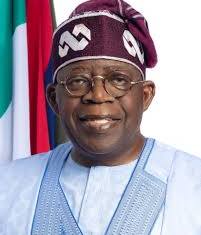

Nigeria’s economic reforms are at a defining crossroads: while the government insists that today’s sacrifices are necessary for tomorrow’s prosperity, millions of households and businesses are still waiting to feel the benefits. In this Op/Ed, Kayode Oladipupo contends that the question is no longer simply whether Nigeria should stay the course, but whether the reforms can deliver measurable improvements in living standards, productive capacity and shared prosperity. For President Bola Tinubu’s reform agenda to earn lasting public confidence, stabilisation must give way to tangible results.
Nigeria’s economic debate has reached a defining moment. After years of structural distortions, fiscal imbalances and foreign-exchange pressures, the country has embarked on a series of difficult reforms aimed at restoring macroeconomic stability. The critical question now is not merely whether these reforms were necessary, but whether the government can sustain them, address their shortcomings and translate economic stabilisation into tangible improvements in the lives of Nigerians.
The answer is yes but staying the course must not become a licence for complacency or an excuse for persistent economic hardship.
Fuel subsidy removal, exchange-rate adjustments and efforts to strengthen public revenue have targeted longstanding structural weaknesses. However, these measures have imposed substantial costs on households and businesses through rising transportation, energy and production expenses. Reversing them without resolving the underlying problems could return the country to the vulnerabilities that necessitated reform in the first place.
The challenge, therefore, is to ensure that the sacrifices associated with economic adjustment yield lasting and broadly shared benefits.
Stability Is the Foundation, Not the Destination
Macroeconomic stability is essential for sustainable growth, but it is not an end in itself. Moderating inflation, stronger external reserves, improved public finances and greater exchange-rate stability can boost investor confidence. However, these gains do not automatically translate into affordable food, decent employment, higher incomes or profitable businesses.
For these benefits to materialise, economic stability must stimulate productive investment, expand domestic output, improve infrastructure, strengthen competition and promote effective public institutions.
This is where Nigeria’s next phase of reform becomes critical. Economic indicators may improve while households continue to struggle with rising living costs and businesses grapple with expensive credit, unreliable electricity, inadequate logistics and declining consumer purchasing power.
Government must therefore look beyond aggregate statistics and demonstrate how its policies are improving conditions for households, enterprises and communities.
Accelerating the Transition to Productive Growth
Nigeria’s immediate priority should be to strengthen the productive sectors that generate jobs, expand incomes and create sustainable wealth.
Agriculture requires improved security, irrigation, storage facilities, mechanisation and stronger market linkages. Manufacturing needs reliable electricity, affordable financing, predictable regulations and efficient transport networks. Small and medium-sized enterprises require simplified tax administration, accessible credit, digital capabilities and practical support to expand beyond subsistence operations.
Although these interventions may take time to deliver their full benefits, implementation delays cannot become a permanent justification for disappointing outcomes. Government must establish measurable targets, publish progress reports and adjust programmes when evidence shows that they are not delivering the intended results.
The Federal Government should provide macroeconomic coordination, fiscal discipline, national infrastructure and a stable policy environment. State governments must strengthen agricultural value chains, vocational training, local infrastructure and investment conditions. Local governments, in turn, should improve markets, basic services and the community-level infrastructure that enables small businesses to thrive.
Reform will achieve meaningful results only when these responsibilities are coordinated rather than pursued as disconnected policy initiatives.
From Policy Announcements to Measurable Outcomes
The next phase of Nigeria’s reform agenda requires a practical accountability framework built around clearly defined responsibilities and measurable outcomes.
First, the Federal Government should be assessed on macroeconomic performance, including inflation, revenue mobilisation, debt sustainability, external-sector resilience and policy predictability.
Second, state governments should be evaluated on productivity, employment generation, investment attraction, food supply, infrastructure delivery and the ease of doing business.
Third, local governments should demonstrate measurable improvements in market infrastructure, basic services and the operating environment for local enterprises.
These assessments must be anchored in credible baseline data, clearly published targets and regular public reporting. The objective is not to create another layer of bureaucracy, but to establish a direct relationship between government policies, public expenditure and measurable economic outcomes.
Social protection must also remain central to the reform process. Economic adjustment cannot be sustainable if vulnerable households bear a disproportionate share of its costs. Targeted assistance, accessible public services and well-designed social investment programmes should complement structural reforms rather than be treated as optional additions.
Stay the Course, but Correct What Is Not Working
Policy continuity is essential because businesses and investors require predictability to make long-term decisions. Frequent reversals can undermine confidence, discourage investment and weaken the credibility of government commitments.
However, continuity should never mean defending ineffective implementation or preserving policies that impose avoidable hardship without delivering corresponding public benefits.
The Tinubu administration must distinguish between the soundness of reform objectives and weaknesses in their execution. Where evidence points to implementation failures, corrective action should be swift. Successful interventions should be consolidated, while missing complementary measures should be introduced without unnecessary delay.
Nigeria must also recognise that macroeconomic reforms alone cannot resolve insecurity, institutional deficiencies, low productivity and poor public-service delivery. These challenges require coordinated action across all tiers of government, supported by stronger institutions and greater accountability for results. Reform must therefore be both consistent in direction and flexible in execution.
The Ultimate Test of Reform
Nigeria should stay the course on necessary reforms, but the ultimate destination must be clear. Success cannot be measured exclusively by stronger external reserves, improved fiscal balances or increased investor confidence. These achievements must translate into productive employment, lower business operating costs, improved purchasing power, expanding enterprises and a sustained reduction in poverty.
The choice is not between economic reform and compassion, nor between stability and prosperity. It is between reforms that remain confined to macroeconomic indicators and reforms that transform the productive capacity of the economy while improving the welfare of citizens.
The government must consolidate what is working, correct what is failing and accelerate the measures required to make growth more inclusive. Its next major assignment is to convert economic stabilisation into a broad-based expansion of economic opportunity.
Ultimately, reforms earn public confidence not simply because they are announced or implemented, but because citizens can see and experience their benefits.
Nigeria must stay the course, but staying the course must also mean insisting on accountability, correcting policy weaknesses and delivering better results for the people.
Oladipupo, a public policy advocate and Managing Director/Chief Executive Officer of Kemkay Consult, writes from Akure, Ondo State, Nigeria.

About The Author


LCFE, FMDQ Clear Sign MoU to Strengthen Petroleum Trade Settlement

Lagos, Ondo, Ekiti Seek Development Partnership with Greenwich Bank

The FAAC Windfall or Subnational Bankruptcy?, By Kayode Oladipupo