
The strongest organisations are not necessarily those with the most sophisticated strategies or governance frameworks, but those whose leaders can translate governance into performance. The real test of leadership lies in the ability to listen to stakeholders, understand strategic intent and act decisively. In this Op/Ed, Kayode Oladipupo argues that when boards and management bridge the gap between oversight and execution, strategy moves beyond boardroom papers to measurable results, driving productivity, profitability, accountability and sustainable shareholder value.
Corporate failures are often blamed on a disconnect between the boardroom and the executive suite rather than on a lack of strategy. This disconnect frequently stems from leaders’ inability to listen, understand and act with discipline. In today’s fast-paced business environment, sustainable productivity and profitability depend heavily on mastering these three essential leadership disciplines.
The board’s primary responsibility is governance, encompassing strategic direction, risk oversight and the protection of long-term shareholder value. Management, by contrast, is responsible for execution. Effective leadership therefore serves as the critical link between governance and execution.
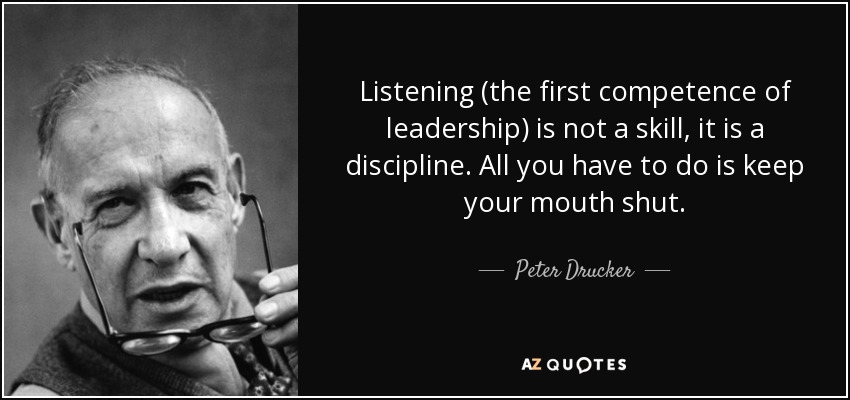
Listening is the first discipline. Management must listen attentively to the board’s strategic priorities, risk appetite and performance expectations. Equally important is listening to employees, customers, regulators, investors and other stakeholders. Such engagement provides insights into operational realities, emerging risks and opportunities for innovation that financial reports alone may not reveal. Listening builds trust and helps prevent the disconnect between strategy and implementation.
Yet listening alone is not enough. Leaders must also understand. Understanding means translating the board’s vision into clear and executable business objectives while taking into account market realities, organisational capabilities and stakeholder expectations. It requires critical thinking, empathy and sound judgment. When management genuinely understands the rationale behind board decisions, strategic priorities become operational commitments rather than mere compliance exercises.
The third discipline is acting. Governance has little value if strategy remains confined to board papers. Effective management translates strategic intent into measurable goals, departmental plans, key performance indicators, budgets and accountability systems. Timely execution, regular performance reviews, transparent reporting and corrective action are essential to ensuring that corporate objectives are consistently achieved. Organisations that act decisively are more likely to outperform those that merely deliberate.
This leadership model aligns closely with globally recognised corporate governance standards. The OECD G20 Principles of Corporate Governance (2023) emphasise effective boards, transparency, accountability, stakeholder engagement and long-term value creation. These principles recognise that governance extends beyond compliance; it should serve as an enabler of sustainable corporate performance.
Similarly, the International Finance Corporation (IFC) identifies good corporate governance as a driver of operational efficiency, sound risk management, improved access to capital and enhanced organisational resilience—essential ingredients for productivity and profitability in both developed and emerging markets.
Nigeria’s Nigerian Code of Corporate Governance (NCCG 2018) reflects these global standards. Issued by the Financial Reporting Council of Nigeria, the Code seeks to institutionalise ethical leadership, transparency, accountability, effective board oversight and stakeholder engagement through a flexible, principle-based “Apply and Explain” approach that can be scaled across organisations.
These frameworks reinforce a fundamental truth: governance succeeds when leadership behaviours support governance principles. Listening strengthens stakeholder engagement. Understanding improves strategic alignment and risk management. Acting delivers accountability and measurable results.
The business case is compelling. Organisations in which boards and management communicate openly tend to experience faster decision-making, stronger employee engagement, greater innovation, stronger customer loyalty and better resource allocation. These outcomes ultimately contribute to higher productivity, stronger financial performance and greater shareholder confidence.
Boards also have important responsibilities. They must communicate strategy clearly, define measurable outcomes, encourage constructive dialogue and provide effective oversight without micromanaging. Executives, in turn, must be willing to receive feedback, respectfully challenge assumptions and execute faithfully while adapting to changing business conditions.
The most successful corporations recognise that governance is not an annual compliance exercise; it is a culture. That culture is built every day by leaders who listen before speaking, understand before deciding and act before opportunities disappear.
In an era of economic uncertainty, technological disruption and heightened stakeholder expectations, competitive advantage will increasingly belong to organisations that close the gap between governance and execution. Listening aligns people with purpose. Understanding transforms strategy into clarity. Acting converts vision into value.
Ultimately, corporate governance is not judged by the elegance of a board charter or the sophistication of a policy manual. It is judged by results. Those results are achieved when leadership consistently listens, understands and acts. That is how governance becomes performance, and performance becomes sustainable profitability.
Kayode Oladipupo, Chief Executive Officer, KEMKAY Consults, is a Public Policy Advocate.

About The Author


Nigeria’s Industrial Future Depends on Strong Manufacturing Infrastructure — IMG Chairman

Unlocking growth in Nigeria’s real estate and hospitality sectors begins with tackling today’s challenges, says Haldane McCall GMD, Dr. Akinlade

How NASD is Opening New Doors for SMEs, Says Longe