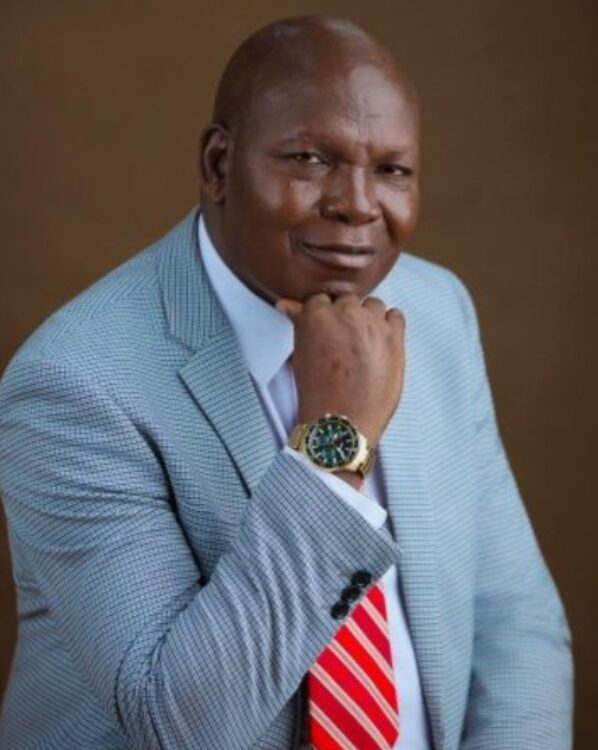

Nigeria is not a poor country; it is a nation richly endowed with natural resources, extraordinary talents and enormous possibilities, yet constrained by decades of policy inconsistency, political divisions, weak institutions and misplaced priorities. Its greatest challenge is not a shortage of opportunities but the failure of leadership and citizens alike to harness them in the collective national interest. In this Op/Ed, Kayode Oladipupo argues that Nigeria must move beyond the politics of blame, propaganda and partisan loyalty to embrace truth, purposeful leadership and a shared commitment to national prosperity. He maintains that the journey to greatness begins with a fundamental shift in national consciousness, backed by the courage, discipline and collective will to translate the country’s immense potential into reality.
Birthdays provide an opportunity for personal reflection, but they also offer a moment to examine the society in which we live and the kind of future we hope to bequeath to generations yet unborn. As I mark another year, my greatest wish goes beyond personal fulfilment, good health and professional accomplishments. It is a fervent desire to see Nigeria summon the courage, wisdom and collective determination to fulfil its enormous potential.
I yearn for a country where truth triumphs over political propaganda, national interest takes precedence over partisan considerations, and leadership is judged not by the power it wields but by the positive difference it makes in people’s lives.
Nigeria’s greatness is neither an illusion nor an unattainable ambition. However, that aspiration will remain elusive until we confront the contradictions that have impeded our progress, learn the right lessons from our history and embrace a common vision for a prosperous and united nation.
Our Chequered Economic Journey
Nigeria’s economic history is characterised by immense promise, missed opportunities, policy inconsistencies and recurring setbacks. At independence in 1960, the country inherited a relatively productive agricultural economy, an emerging industrial base and abundant human and natural resources. The regional economies were driven by agricultural exports, while investments in education, commerce and infrastructure provided a solid foundation for future growth.
The discovery and expansion of petroleum production fundamentally altered the nation’s economic structure. Regrettably, the oil boom also fostered excessive dependence on crude oil, weakened agricultural productivity, distorted economic priorities and left the economy vulnerable to external shocks.
Over the years, successive administrations have introduced various economic interventions, including structural adjustment, privatisation, liberalisation, exchange-rate reforms, subsidy regimes and several fiscal and monetary policy measures. While some initiatives delivered measurable gains, others were undermined by weak implementation, policy reversals and inadequate institutional capacity.
The fundamental lesson is that Nigeria’s challenge has never been a complete absence of sound economic ideas. Rather, it is our inability to sustain effective policies, strengthen institutions and translate economic growth into tangible improvements in the living conditions of ordinary citizens.
Partisanship and the Cost of Division
One of the most significant impediments to Nigeria’s transformation is the growing tendency to subordinate national interest to partisan loyalty.
We have developed an unfortunate culture of defending political leaders simply because they belong to our preferred parties while dismissing potentially beneficial policies because they originate from political opponents. Government initiatives are frequently assessed through political affiliations rather than their intrinsic merits, with national development sometimes sacrificed on the altar of electoral calculations.
A government should not expect unquestioning support for every policy, just as opposition parties should not regard governmental failure as an opportunity to advance their political fortunes.
Democracy thrives on constructive disagreement, accountability and robust scrutiny. However, a responsible opposition must go beyond criticism by presenting credible alternatives. Similarly, those in government must understand that electoral victory does not confer a monopoly on knowledge, wisdom or patriotism.
Nigeria needs a political culture in which competition strengthens governance rather than deepens divisions. The ultimate objective of political participation should be national progress, not the permanent triumph of one political interest over another.
When Myths Become More Attractive Than Truth
No nation can make meaningful progress when its citizens become more committed to defending narratives than establishing facts.
The growing inclination towards political myths, historical distortions, misinformation and selective interpretations of events poses a serious threat to national cohesion and democratic development. It undermines public reasoning, fuels distrust and makes constructive engagement increasingly difficult.
We must rediscover the distinction between criticism and condemnation, patriotism and blind political loyalty, as well as facts and propaganda. Equally important is the courage to acknowledge genuine achievements without abandoning critical scrutiny and to expose failures without resorting to falsehoods.
Truth must transcend political parties, ethnic identities and religious affiliations. It should constitute the foundation of national discourse, public accountability and sound policy formulation. A country that cannot agree on facts will struggle to agree on solutions.
Citizen Empowerment and Collective Responsibility
The task of building a great nation cannot be left exclusively to government. Citizens must recognise that they are not merely passive recipients of governance but active stakeholders in the national development process.
An empowered citizen understands and exercises personal rights, respects the rights of others, obeys legitimate laws, fulfils civic obligations, participates in democratic processes and demands accountability from public officials. Such a citizen does not exchange the future for temporary electoral gratification or allow ethnic, religious and political sentiments to override sound judgement.
We must also embrace the dignity of productive labour, entrepreneurship, innovation and self-reliance. While government has a responsibility to provide an enabling environment, citizens must equally demonstrate the initiative and enterprise required to create wealth, generate employment and contribute meaningfully to economic development. The principle is simple: a society that demands responsible leadership must also cultivate responsible followership.
From Economic Reforms to Mass Prosperity
Nigeria must remain committed to necessary economic reforms, notwithstanding the difficulties associated with their implementation and the immediate sacrifices they may require. However, reforms should never become ends in themselves. Their ultimate justification must be measured by the prosperity they create and the improvements they deliver to citizens’ welfare.
Macroeconomic stability must translate into microeconomic relief. Improved foreign reserves, exchange-rate stability, declining inflation and stronger public finances are important economic indicators. Nevertheless, their true significance lies in whether they translate into improved household purchasing power, affordable food, decent employment, accessible healthcare and sustainable business growth.
The next phase of economic transformation must prioritise productivity, industrialisation, agricultural modernisation, infrastructure development, energy security, affordable credit and a competitive operating environment for small and medium-sized enterprises. Government must also strengthen social protection, improve public education and healthcare, and ensure that vulnerable segments of society are not permanently excluded from economic opportunities.
The ultimate objective should be to move Nigerians beyond economic survival towards meaningful economic participation, wealth creation and shared prosperity.
A Government of National Unity and Shared Priorities
Nigeria urgently needs a new culture of national collaboration built around shared aspirations and collective responsibility.
I believe the time has come to embrace the philosophy of a government of national unity. This should not necessarily be interpreted as a political coalition in which parties merely negotiate positions and share ministerial appointments. Rather, it should represent a national consensus on the fundamental priorities required to move the country forward.
Security, education, healthcare, infrastructure, economic diversification, institutional accountability and poverty reduction must transcend electoral cycles and political affiliations. They should remain national priorities irrespective of which party occupies the corridors of power.
Government must create room for constructive contributions from opposition parties, professionals, civil society organisations, the private sector, traditional institutions and the younger generation.
Equally, opposition parties must demonstrate that their commitment to Nigeria’s development is greater than their ambition to capture political power.
What the country needs is a national development compact that commits successive administrations to measurable objectives, policy continuity, institutional strengthening and transparent performance assessment. Political competition should determine who governs, but it should never determine whether the nation progresses.
The Nigeria I Wish For
My preferred Nigeria is a country where leadership is determined by competence, character, integrity and the capacity to deliver results; where institutions are stronger than individuals and public office is regarded as a sacred responsibility rather than an avenue for personal enrichment.
I envision a nation where a child’s future is not predetermined by the circumstances of birth, where justice is not the exclusive preserve of the wealthy and influential, and where ethnicity, religion, gender or political affiliation does not diminish anyone’s opportunities.
I wish for a productive and competitive economy that produces more than it consumes, diversifies its exports beyond crude oil, supports indigenous entrepreneurs, rewards innovation and creates decent employment for its growing population.
I yearn for a country where farmers cultivate their land without fear, businesses operate without crippling infrastructure costs, students receive quality education, hospitals provide effective healthcare and communities enjoy the security of lives and property.
Above all, I wish for a Nigeria whose citizens believe in its possibilities and whose leaders possess the courage, vision and integrity to make difficult but necessary decisions in the overriding national interest.
My Birthday Wish: A New National Consciousness
As I celebrate another birthday, I am reminded that personal milestones are fleeting, but the contributions we make to society can endure long after we are gone.
Nigeria does not lack the resources, talents, intelligence or opportunities required to become a great nation. What we urgently need is a fundamental shift in national consciousness: a willingness to place country above party, truth above propaganda, competence above sentiment and collective prosperity above individual advantage.
We must abandon the tendency to interpret every government policy as either a political victory or defeat. Instead, we should develop the maturity to support policies that work, challenge those that fail and recommend better alternatives where necessary.
National transformation is not an event that can be achieved overnight. It is a continuous process requiring discipline, patience, sacrifice, institutional consistency and a collective commitment to the common good.
My birthday wish is for a Nigeria that works for everyone, not merely the privileged few; a country where diversity becomes a source of strength, natural resources translate into shared prosperity and democracy delivers dignity, justice and opportunity to all.
Let us build a nation that future generations will be proud to inherit, rather than one they will struggle to forgive us for leaving behind.
Happy Birthday to me. And may Nigeria finally rise to fulfil its greatness!
Kayode Oladipupo, a Public Policy Advocate and Managing Director/Chief Executive Officer of Kemkay Consult, writes from Akure, Ondo State.

About The Author

Fuel Subsidy: From Fiscal Relief to Shared Prosperity, By Kayode Oladipupo
An X-Ray of Nigeria’s Capital Market Master Plan, By Uche Uwaleke
Nigeria Has the Minerals. Can CMFC Build the Capital? By Charles Fakrogha