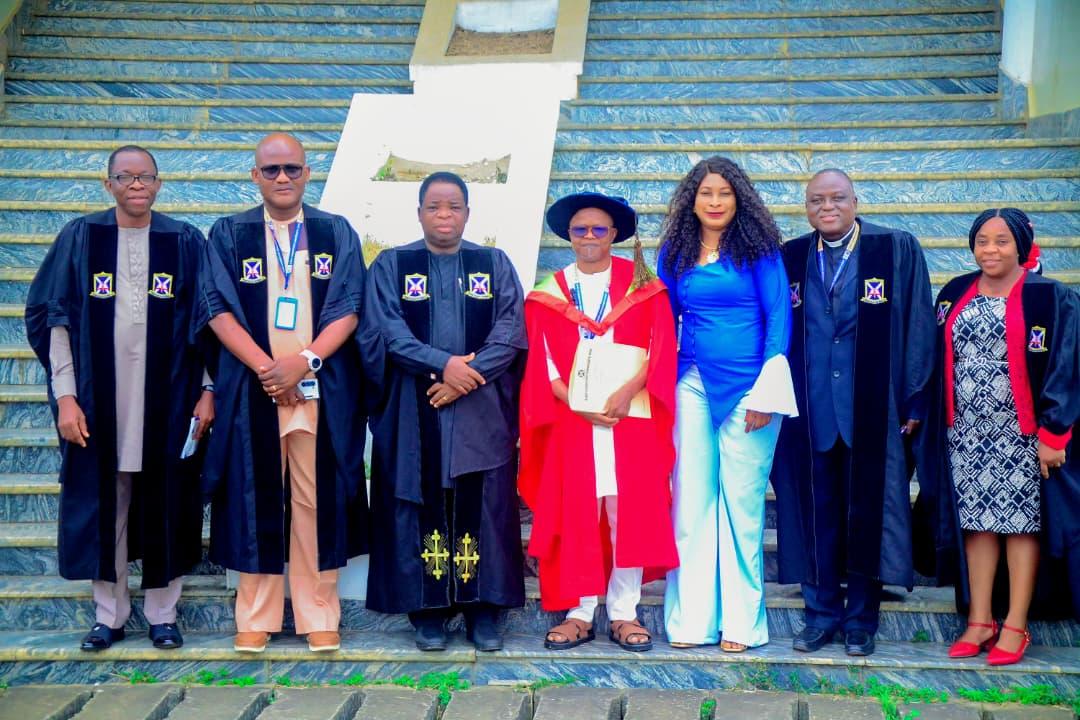

This call was made by Professor Stephen Solanke, a distinguished scholar of African literature and cultural philosophy, during the 26th Inaugural Lecture of Ajayi Crowther University, Oyo, held recently.
kernel of the Story
Delivering a lecture titled “Orality and the Development of Man: The Foolishness of the Gods and the Wisdom of Man,” Prof. Solanke emphasised that the foundations of sustainable leadership and good governance lie in words, both spoken and written. He described orality through proverbs, folklore, myths, and storytelling as an enduring tool for shaping societies, transmitting values, and promoting ethical leadership.
What Professor Solanke says
“Before the advent of written laws and constitutions, societies were guided by the power of the spoken word. Orality is not only cultural heritage; it is a framework for empathy, listening, and inclusive governance.”
He warned against the dangers of ignoring indigenous knowledge systems and called on modern leaders to reconnect with the moral lessons embedded in oral traditions. He highlighted how listening to the voices of the people through dialogue and community engagement remains central to good leadership.
Don peeps into History
He also drew lessons from history, citing instances where written laws were used to enforce injustice, such as colonial decrees and apartheid-era policies. According to him, laws must reflect the lived realities and cultural values of the people, or risk becoming tools of oppression.
Quoting a famous Yoruba proverb which says: “The okrocannot grow taller than its planter”, Solanke reminded leaders that power is not absolute and must always be accountable to the people.
“ In the so-called ‘foolishness of the gods,’ there is wisdom for man, Orality continues to offer practical insights for leadership rooted in humility, justice, and service. Speaktruthfully and act with integrity, listen to the people through active engagement and dialogue, preserve culture and tradition while embracing progress, uphold laws that serve justice, not dominance and lead with humility, not hubris.”, he added.

About The Author


I-Create Club Rewards Creativity and Innovation at Annual Competition
I-Create Club Rewards Creativity and Innovation at Annual Competition

I-Create Club Rewards Creativity and Innovation at Annual Competition