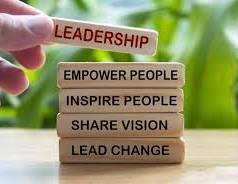

Corporate governance is often judged by the quality of its policies, structures, and controls, but its true strength lies elsewhere in the ability of leaders to lead one another. The most effective organizations are not those led by the most powerful individuals, but those where influential leaders can collaborate, challenge one another constructively, uphold accountability, and place institutional interests above personal ambitions.
In this Op/Ed, Kayode Oladipupo contends that in an increasingly complex and interconnected world, the capacity to align leaders around a shared purpose has become the defining test of governance and a critical determinant of long-term organisational success.
Corporate governance is often discussed in terms of structures, regulations, and compliance frameworks. Yet, at its core, governance is fundamentally about leadership, more specifically, the ability to lead leaders.
Unlike conventional management environments, where authority flows through hierarchical structures, corporate governance brings together individuals who are themselves accomplished leaders: board chairpersons, directors, chief executives, regulators, and major investors. The challenge is not simply managing people but aligning influential individuals with diverse perspectives, experiences, and interests around a common purpose.
This reality makes leading leaders one of the most critical, yet least appreciated, dimensions of effective governance. In many organisation’s, governance failures are often attributed to weak controls or inadequate regulations. While these factors certainly matter, the underlying problem is frequently the inability of leaders to lead one another effectively. Strong personalities, competing ambitions, conflicts of interest, and poor communication can undermine even the most sophisticated governance frameworks.
The role of a board chair, for instance, extends far beyond presiding over meetings. Effective chairs create an environment where independent thinking is encouraged, robust debate is welcomed, and consensus is built around the organization’s long-term interests. They understand that leadership within the boardroom cannot rely solely on positional authority; it must be earned through credibility, competence, and integrity.
Similarly, chief executives who excel in governance recognize that their relationship with the board is not adversarial but collaborative. While management is responsible for executing strategy, the board provides oversight and strategic guidance. The most successful organizations are those in which both parties maintain clear boundaries while working toward shared objectives.
Leading leaders also requires the ability to manage disagreement constructively. Healthy governance is not characterized by the absence of conflict but by the presence of productive tension. Directors should feel comfortable questioning assumptions, challenging proposals, and scrutinizing risks without fear of being perceived as disruptive. When dissenting views are suppressed, organisations become vulnerable to groupthink, one of the most dangerous threats to sound decision-making.
History offers sobering lessons. The collapse of Enron, the emissions scandal at Volkswagen, and the governance failures that contributed to the global financial crisis all demonstrate what can happen when oversight mechanisms fail and influential leaders are not held accountable. In each case, governance structures existed on paper, but leadership within those structures fell short.
Accountability remains one of the defining responsibilities of leaders within governance systems. Boards must be willing to evaluate executive performance objectively, enforce ethical standards consistently, and address emerging risks proactively. Governance loses its effectiveness when personal relationships or vested interests take precedence over institutional responsibilities.
Trust is equally indispensable. Leaders are more likely to collaborate effectively when they have confidence in one another’s intentions and commitment to the organization’s success. Transparency, consistency, and ethical conduct help build this trust. Without it, governance can quickly deteriorate into factionalism, suspicion, and internal power struggles.
Another critical aspect of leading leaders is succession planning. Strong governance recognizes that no individual, regardless of talent or achievement, is indispensable. Organizations that thrive over the long term deliberately invest in developing future leaders and ensuring continuity. The true test of leadership is not personal longevity but institutional resilience.
For Nigeria, these lessons are particularly relevant. Whether in the public or private sector, sustainable development depends on institutions that are stronger than the individuals who occupy leadership positions. Too often, governance challenges stem from an overreliance on personalities rather than systems. When institutions become dependent on a single influential figure, continuity and accountability are weakened.
As Nigeria seeks to strengthen its corporate sector, attract investment, and improve public-sector performance, greater attention must be paid to the quality of leadership within governance structures. Effective governance requires leaders who can collaborate across differences, subordinate personal interests to organizational goals, and uphold principles even when doing so is inconvenient.
Ultimately, leading leaders is the highest expression of leadership in corporate governance. It demands vision without arrogance, authority without domination, and influence without coercion. More importantly, it requires a commitment to building institutions that endure beyond individual tenures.
The strength of corporate governance is not measured by the power of a single leader but by the ability of many leaders to work together in pursuit of a shared purpose. In an era where organizations face increasing complexity and scrutiny, that capability may well determine the difference between sustainable success and costly failure.
Kayode Oladipupo is the Chief Executive Officer of KEMKAY Consults and a public policy advocate.

About The Author

Fuel Subsidy: From Fiscal Relief to Shared Prosperity, By Kayode Oladipupo
The Path to Nigeria’s Greatness: My Birthday Wish, By Kayode Oladipupo

An X-Ray of Nigeria’s Capital Market Master Plan, By Uche Uwaleke