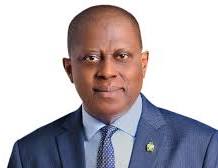
From Macroeconomic Stability to National Prosperity: Nigeria’s Next Shared Project, By Kayode Oladipupo

Nigeria has spent the past three years taking painful but necessary steps to restore stability to an economy weighed down by inflation, currency pressures, fiscal imbalances and declining purchasing power. Today, some of the key indicators are beginning to point in the right direction—but for millions of Nigerians, economic recovery remains an abstraction if it does not translate into jobs, stronger incomes, affordable food, reliable electricity and improved living standards. In this Op/Ed, Kayode Oladipupo argues that the real test, therefore, is no longer whether Nigeria can stabilise its economy, but whether it can turn that stability into productive investment, shared opportunity and tangible prosperity for its citizens.
Nigeria stands at a critical economic crossroads. Over the past three years, the country has undertaken a series of difficult reforms aimed at correcting long-standing macroeconomic distortions. The question before the nation now is no longer whether stabilisation was necessary. It is whether the gains from that stabilisation can be translated into broad-based prosperity that Nigerians can see, feel and participate in.
There are credible grounds for cautious optimism. Real GDP grew by 4.0 per cent in 2025, while inflation declined from 33.2 per cent in 2024 to 23 per cent. The current account recorded a surplus equivalent to 4.8 per cent of GDP, while gross international reserves increased to approximately $45.8 billion by the end of 2025.
The positive trend has continued into 2026. GDP expanded by 3.89 per cent year-on-year in the first quarter, while headline inflation moderated to 15.91 per cent by June. Foreign reserves had also risen to approximately $51.46 billion, while the naira remained broadly stable in the foreign exchange market.
These are significant milestones. They indicate that the difficult reforms initiated since 2023 are beginning to restore macroeconomic credibility, strengthen external buffers and provide a more predictable environment for investment. The World Bank has similarly acknowledged meaningful progress in restoring macroeconomic stability.
Yet, an equally important reality remains: household incomes have not fully recovered, and poverty remains stubbornly high. The African Development Bank estimates extreme poverty at about 31 per cent in 2025, while real GDP per capita growth remained modest. This is the critical gap Nigeria must now bridge.
Macroeconomic stability is not the destination; it is the foundation. The next phase of Nigeria’s economic journey must deliberately shift the focus from stabilisation to production, productivity, employment and sustained growth in real incomes.
First, productivity must become the organising principle of economic policy. Every major government intervention should answer a fundamental question: does it make it easier, cheaper and more profitable to produce in Nigeria?
Second, energy must become a central economic priority. Reliable electricity is not simply a social service; it is an essential component of industrial policy. Nigerian businesses cannot compete effectively in global markets while bearing the enormous cost of self-generation.
Third, infrastructure investment must be directly linked to economic production. Roads, railways, ports, broadband networks and logistics infrastructure should connect farms to processing centres, factories to markets, and production zones to domestic and international export corridors.
Fourth, agriculture must move decisively from subsistence to commercially driven value chains. This requires an integrated approach to production, storage, processing, logistics and exports. Nigeria cannot sustainably contain food inflation without significantly increasing domestic agricultural productivity.
Fifth, the States must become engines of microeconomic development. While the Federal Government should concentrate on macroeconomic stability, national infrastructure, monetary and trade policy, States should compete constructively to create enabling environments for agriculture, manufacturing, services, tourism and investment.
Sixth, Nigeria must broaden its tax base without suffocating productive enterprises. Government revenue should increasingly be driven by a larger, more productive economy rather than by imposing heavier burdens on the same pool of formal businesses and taxpayers.
Finally, economic reform must be accompanied by targeted social protection. Citizens must be protected from the harshest effects of economic transition without preserving the inefficient structures that contributed to the crisis in the first place.
Perhaps the greatest danger at this stage is policy impatience. Nigeria must neither abandon necessary reforms simply because they are painful nor assume that macroeconomic stabilisation will automatically translate into prosperity.
Government must provide policy consistency and an enabling business environment. Businesses must invest, innovate and improve productivity. States must compete constructively. Labour and citizens must have a meaningful voice in the reform conversation. Financial institutions must increasingly channel capital towards productive activities rather than consumption.
Nigeria should also consider establishing a National Prosperity Scorecard that publicly tracks key indicators, including inflation, productivity, investment, electricity reliability, non-oil exports, employment, poverty, real incomes, infrastructure delivery and human-capital outcomes—against clearly defined annual targets.
The objective should be straightforward and measurable: Stability should produce investment. Investment should produce production.
Production should create jobs. Jobs should generate rising incomes. Rising incomes should expand purchasing power. And purchasing power should translate into prosperity.
Nigeria has begun laying the difficult foundation for economic recovery. The next challenge is to build upon it deliberately and inclusively. That responsibility cannot rest with government alone.
Macroeconomic stability is the foundation. Productivity is the engine. Inclusive prosperity must be the destination. Making that journey successful must now become Nigeria’s shared national project.
Oladipupo, Managing Director and Chief Executive Officer, Kemkay Consult, is a Public Affairs Commentator and Policy Advocate.

About The Author

LCFE, FMDQ Clear Sign MoU to Strengthen Petroleum Trade Settlement
Nigeria’s Reforms. : Stay the Course ?, By Kayode Oladipupo
Lagos, Ondo, Ekiti Seek Development Partnership with Greenwich Bank