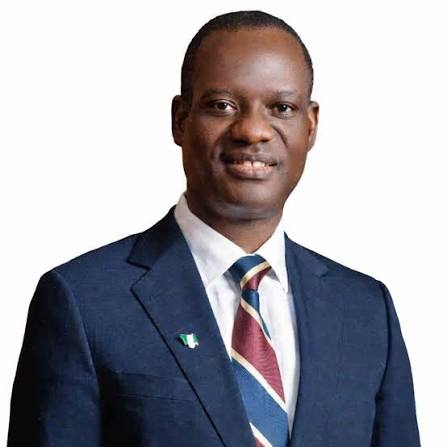
From Reform to Results: Can Oyedele Deliver Prosperity ?, By Kayode Oladipupo

Taiwo Oyedele’s assumption of office as Nigeria’s Minister of Finance and Coordinating Minister of the Economy comes at a moment of fragile stability and cautious optimism. The broad outline of his roadmap, anchored on productivity, fiscal discipline, fair taxation, policy coherence, and public-private collaboration is not only familiar but fundamentally sound. The real question, however, is not whether the ideas are right; it is whether Nigeria can finally execute them well enough to translate reform into prosperity.
At a conceptual level, the framework reflects global best practice. Economies that have transitioned from volatility to sustained growth, including Indonesia after the Asian financial crisis, Vietnam through export-led reforms, and, closer to home, Rwanda’s governance-led transformation share similar policy DNA: macroeconomic stability, disciplined public finance, and a predictable business environment. In that sense, Oyedele’s agenda is not experimental. It is orthodox and that is precisely its strength.
Yet Nigeria’s challenge has never been a shortage of ideas. It is a deficit of execution. Policy inconsistency remains a persistent risk. Investors and businesses respond less to policy announcements than to policy behaviour over time. Mixed signals whether in foreign exchange management, tariff regimes, or implicit subsidies can quickly erode confidence. If this reform cycle is to succeed, it must break from Nigeria’s pattern of partial implementation and quiet reversals. Consistency, not creativity, will determine credibility.
Equally critical is coordination. The Minister’s emphasis on stronger alignment across government is well placed, but history counsels caution. Nigeria’s institutional architecture is fragmented, with overlapping mandates and uneven capacity across ministries, agencies, and tiers of government. Without a disciplined coordination mechanism backed by political authority, even well-designed policies can dissipate before impact is felt. Reform, in this context, is less about design and more about orchestration.
Perhaps the most delicate component of the roadmap is revenue optimisation and fair taxation. Nigeria’s tax-to-GDP ratio remains among the lowest globally, making expansion unavoidable. However, the pathway is narrow. Aggressive tax enforcement in a low-trust environment risks pushing more economic activity into informality. The sequencing must therefore be deliberate: visible improvements in public service delivery and accountability must precede, or at least accompany, stricter compliance. Citizens are more willing to pay when they can see and trust the value they receive.
Public-private partnerships (PPPs), another pillar of the agenda, offer a viable route to unlocking infrastructure and investment. But Nigeria’s track record here is mixed. For PPPs to move from rhetoric to results, three conditions are essential: enforceable contracts, regulatory stability, and credible dispute resolution mechanisms. Without these, private capital will either stay away or demand a risk premium that undermines affordability and impact.
Beyond policy and capital flows lies the most important test: whether reforms translate into tangible improvements in the lives of Nigerians. Macroeconomic stability, while necessary, is not sufficient. For reform to be politically and socially sustainable, it must be felt at the household level. Inflation must ease, real incomes must recover, and jobs must expand not just in headline numbers, but in quality and accessibility.
This is where timing becomes critical. Expectations must be managed with honesty. Even under optimal conditions, the benefits of structural reform are not immediate. In the short term, stabilisation may even come with discomfort. The medium term two to three years is typically when investment begins to respond and employment gradually improves. Broad-based prosperity, however, is a longer-term horizon. Compressing this timeline through rhetoric risks undermining credibility when results lag expectations. Ultimately, the success of Oyedele’s roadmap will hinge on three non-negotiables.
First, unwavering policy consistency. Reform credibility is cumulative and easily lost.
Second, demonstrable governance discipline: reducing leakages, improving transparency, and showing that public resources are managed with integrity.
Third, early, visible wins that signal progress to citizens whether through targeted inflation relief, improved service delivery, or job-creating initiatives.
Nigeria does not need another well-articulated reform agenda. It needs one that is executed with discipline, sustained with political will, and translated into outcomes that citizens can see and feel. The opportunity is real. So is the risk. The difference, as always, will be execution.
Oladipupo, Chief Executive Officer, KEMKAY Consults, is a public policy advocate.

About The Author


LCFE, FMDQ Clear Sign MoU to Strengthen Petroleum Trade Settlement
Nigeria’s Reforms. : Stay the Course ?, By Kayode Oladipupo
Lagos, Ondo, Ekiti Seek Development Partnership with Greenwich Bank